
Prof. Dr. Seda Yıldırım
Department of Business Administration · Tekirdag Namık Kemal University
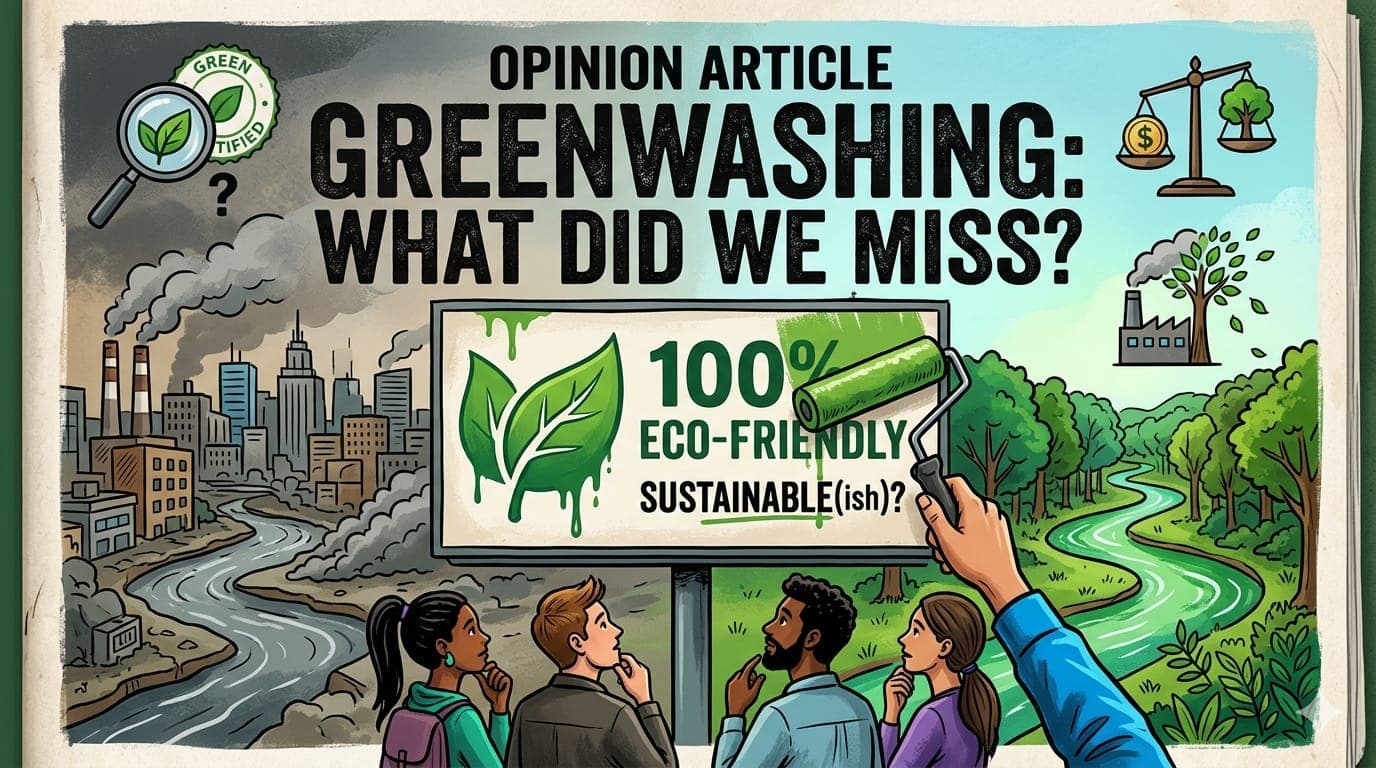
In the 21st century, sustainable transformation has entered the lives of businesses as a rising trend. Consumers with increasing environmental awareness have begun to demand more eco-friendly and sustainable products from brands. However, green transformation is not easy for businesses and brands that follow traditional economic models. At this point, many brands and businesses that have started adopting sustainable marketing practices with good intentions have fallen into the trap of greenwashing.
Greenwashing is essentially one type of deceptive practice. Giving the impression of being more environmentally friendly or green than one is or claiming to possess environmentally conscious characteristics that don't exist are among the most blatant greenwashing practices. Unfortunately, we witness many famous and major global brands facing accusations of greenwashing.
It can be said that brands and organizations engaging in greenwashing are unknowingly causing significant harm to the SDGs. Initially, greenwashing may have been overlooked because brands were perceived as playing a promotional role in raising environmental awareness and spreading green transformation. However, the dark side of greenwashing has increased at an unexpected pace. Brands began to portray themselves as more sustainable than they were, promoting their products as 100% environmentally friendly. Claims about green spaces and sustainability rapidly increased in advertising and promotional campaigns. While sustainability remained largely unknown to many consumers, mass-market brands exploited this ignorance. Confusing logos, certifications, packaging, and slogans related to green and environmentally friendly products posed a major threat to genuine green consumption.
The biggest motivating factor in the rise of greenwashing practices can be considered the ambiguity surrounding the concept of "sustainability." Sustainability can be an abstract and difficult-to-understand concept. The sustainability phenomenon, which increased with the SDGs adopted in 2015, quickly entered our lives. However, what is expected of individuals in the name of sustainability in daily life has not been fully explained. This ambiguity, lack of information, and growth models based on the balance between environment and economy have been widely discussed in the literature. The assumption that there is always a gap between individuals' actual adaptation of sustainable consumption attitudes and their cognitive acceptance of them often prevails. It is thought that mass-market brands feed on this gap in consumer attitudes. Therefore, it can be argued that the lack of information and inadequate attitudes regarding sustainability enable global brands engaging in greenwashing to suddenly adopt the role of sustainable brands
Recent years have shown that achieving sustainability goals requires individuals, local governments, brands, and the state to collaboratively embrace the green transition. What is expected from large brands accused of greenwashing is that they genuinely embrace the green transition. The European Union imposes significant legal penalties for the detection of greenwashing practices. While it has become almost customary for some brands to be accused of greenwashing, there are also serious dangers in brands abandoning the green transition. Essentially, a system of penalties for greenwashing, weighted according to whether practices are closer to the white side or dark side, should be used to avoid creating a deterrent effect on brands adopting green practices. For large, mass-producing companies, the transition from a conventional economy to a green economy may be more challenging. A slow green transition is acceptable for major economic transformation. However, the expectation is not an escape from sustainability, but a focus on a gradual transition. Brands demonstrating a responsible and ethical approach in their advertising and promotional activities will strengthen their brand reputation. No brand wants to be known in the market as deceptive, fraudulent, or dishonest. The dark side of greenwashing inadvertently labels brands as liars, and dishonesty damages brand reputation over time. Accordingly, brands running advertising and promotional campaigns based on the environmentally friendly and recycled material content of their actual and existing products will ensure a win-win situation for everyone in the long run. When a sustainable future is considered as a shared dream, sustainable consumption and sustainable production will together shape the economy. A one-sided sustainability approach is insufficient for a green transformation in the economy.
Yildirim S (2023), "Greenwashing: a rapid escape from sustainability or a slow transition?". LBS Journal of Management & Research, Vol. 21 No. 1 pp. 53–63, doi: https://doi.org/10.1108/LBSJMR-11-2022-0077
Arpit Tiwari, Shyam Sunder Agrawal, Pawan Kumar, Seda Yıldırım, 2026. "Intersecting Paradigms: Reducing Greenwashing, Ensuring Sustainable Claims and Achieving Corporate Transparency", Eco Illusions: Unmasking Greenwashing in the Shared Economy, Pawan Kumar, Sumesh S. Dadwal, Pooja Khanna, Rajesh Verma, Gordon Bowen. https://doi.org/10.1108/978-1-83662-782-120261002
Yıldırım, S. (2024). A journey to the dark side of greenwashing, https://360info.org/a-journey-to-the-dark-side-of-greenwashing/
Yıldırım, S. (2025). The Trap of Greenwashing, Blog Article, https://jkeconomicassociation.com/the-trap-of-greenwashing/
Yıldırım, S. (2025). Unveiling Circularity: Challenges and Barriers in Transitioning to Circular Practices. In: Singh, P., Daga, S., Yadav, K., Mishra, V. (eds) Circular Economy and Environmental Resilience. Springer, Cham. https://doi.org/10.1007/978-3-031-93091-1_8
Dr. Seda Yıldırım is a full-time professor at the Department of Business Administration at the Tekirdag Namık Kemal University, Turkey. Dr. Yıldırım studies Sustainable Development, the 2030 Sustainable Development Goals, Sustainable Consumption Patterns, Higher Education, Environmental Quality, Social Welfare, and Sustainable Health and Food Security.