
Shaivi Chaurasiya
Assistant Professor in the Madhya Pradesh Higher Education
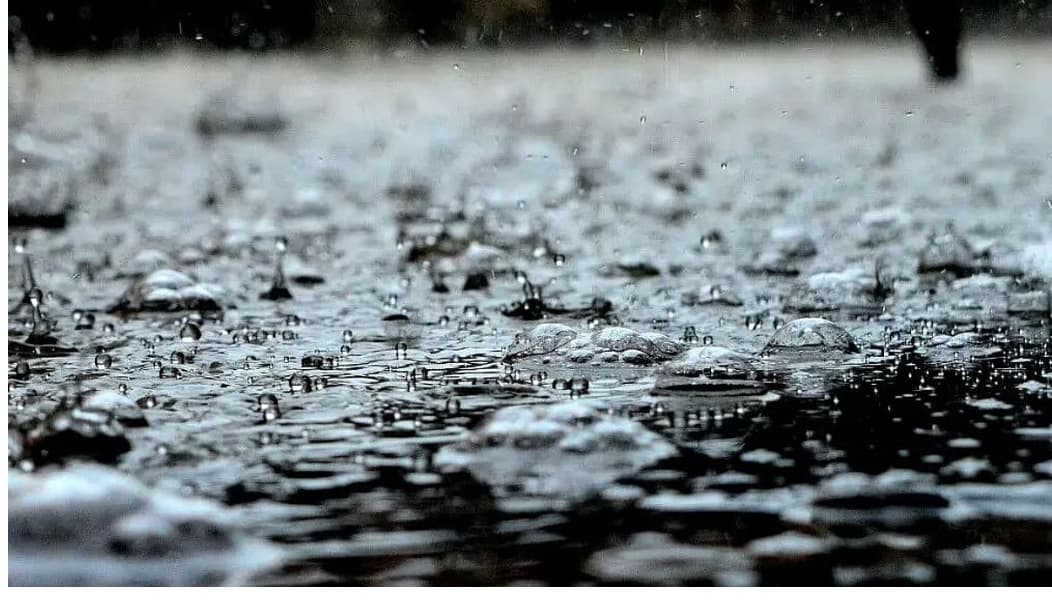
Meghalaya is known as an “Abode of Clouds” and is home to some of the highest recorded rainfall regions globally. Nowadays, the state has been in the news for its water-stress conditions. According to recent IMD statistics, the state has received only 3.0 mm of rainfall against the normal 19.3 mm, showing an 84% deficit. The worst-affected regions are the Garo and Jaintia Hills, except for Southwest Khasi Hills, which recorded 2725.3 mm of rainfall against the normal 1828 mm, resulting in a 49% excess rainfall. This indicates strong spatial variability in atmospheric phenomena.
But the question that arises here is: Is this the first time the state has experienced such a rainfall anomaly? The answer is no! Since the 1980s, the central and southern parts of the state have consistently received higher rainfall than the rest of the state. The central plateau regions receive 4000–8000 mm of rainfall, while the remaining parts receive around 2000 mm. The wettest places on Earth, Cherrapunji and Mawsynram, are also located in the southern part of the state, more specifically in the Khasi region. However, this does not ensure that the whole state is water-abundant. Moreover, the region has always been a victim of seasonal water scarcity despite being blessed with abundant water resources. Therefore, this is not the first time the region has experienced a rainfall anomaly.
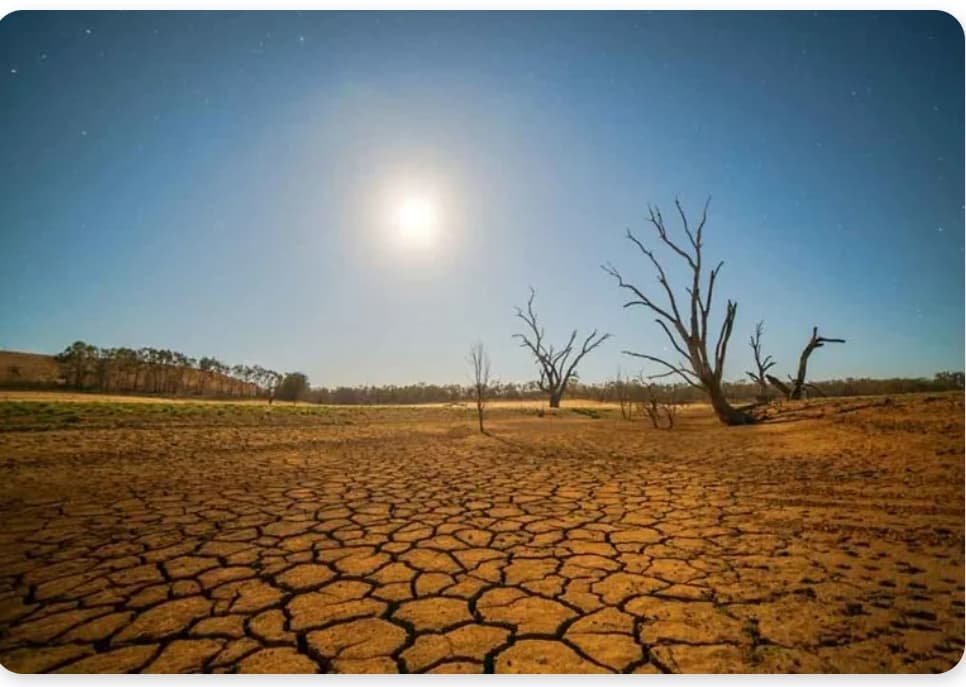
However, the most astounding thing that has happened, perhaps never before on such a scale, is the widening gap between the highest and lowest rainfall regions, where even the wettest places on Earth are experiencing unusually dry conditions. It is often said that the total rainfall in the state remains almost the same, but the nature of rainfall has been changing. The amount of total precipitation and the frequency of light rainfall events have declined, indicating a shift towards more erratic and concentrated rainfall patterns.
Many researchers believe that climate change is a major factor contributing to the shifting of monsoonal rainfall patterns. This argument may be true up to a certain threshold, as reports suggest that the southern and central regions will continue to remain vulnerable to higher precipitation extremes, while the rest of the state may face severe heat stress due to rising temperatures. The state has been developing a tendency towards short-term intense precipitation events alongside long-term water distress driven by increasing heatwaves.
This has increased the frequency of disastrous phenomena, including floods and droughts, at the most fundamental level. When we shift our perspective from atmospheric processes to hydrological processes, the picture becomes much clearer. The region is not only losing rainfall but also losing its capability to hold water. As the region is surrounded by mountains and characterized by steep slopes and rocky terrain, less-permeable surfaces push rainwater downhill rapidly. Instead of infiltrating into the groundwater system, much of the rainfall becomes overland flow.
There are theories, such as the Milankovitch Cycle, which suggest that long-term shifts in atmospheric processes are natural phenomena. However, when we investigate the issue from a neutral standpoint, the current changes can no longer be viewed solely as manifestations of nature. In the present era, climate change is just one part of the story. The current disastrous scenario presents a multifaceted reality on a larger scale.
For example, Meghalaya’s landscape has been transformed by human activities. It has been observed that the race towards economic growth is increasingly inhibiting the natural growth processes of the environment, and when nature stops growing, the economy ultimately suffers as well. There are many factors that have contributed to the water deficit in the region.
Firstly, the population of Meghalaya is growing at an accelerating rate, which increases the demand for water resources. The booming population has led to urbanization in the region, which has significantly impacted the hydrological properties of Meghalaya. It has been reported that Southwest Khasi Hills and South Garo Hills are among the least urbanized regions of Meghalaya, and they are also the areas where water scarcity is comparatively lower.
Secondly, continuous deforestation through timber extraction, firewood collection, and wildfires is another major concern. In general, deforestation reduces the soil’s capacity to absorb water, thereby limiting the amount of water that reaches the subsurface.
Thirdly, livestock farming is another factor that may indirectly influence the hydrological system. Research suggests that livestock activity can directly and indirectly affect hydrological processes. Through grazing and trampling, particularly where grazing pressure is high, livestock can reduce vegetation cover and increase soil compaction. This can decrease the soil’s capacity to conduct and infiltrate water, potentially increasing surface runoff and reducing the amount of rainfall that reaches deeper soil layers. Consequently, less water may be available for groundwater recharge, while more moisture can remain exposed near the surface and be lost through evaporation.
However, this relationship should not be interpreted as a simple cause-and-effect relationship between livestock farming and water scarcity. The impact depends on factors such as livestock density, grazing intensity, vegetation cover, soil characteristics and land-management practices. Interestingly, government data indicate that South West Khasi Hills and Garo Hills have some of the lowest shares of livestock farming. This spatial pattern may provide an additional dimension for understanding differences in hydrological conditions across the state, although livestock density alone cannot establish that it is responsible for differences in groundwater availability.
Hence, the water crisis of Meghalaya cannot be attributed to a single factor. It is the cumulative outcome of changing rainfall characteristics, rising temperatures, topography, land-use transformation, deforestation, urbanization and other human pressures on the landscape. The problem therefore extends beyond the question of how much rain Meghalaya receives. The more important question is: How much of that rainfall can the landscape actually retain? It is high time we stopped merely “water boasting” and shifted our focus towards solutions. Meghalaya does not need to be reminded that it receives some of the highest rainfall on Earth. What it needs is the ability to capture, retain, recharge and wisely manage the water it receives. The future of Meghalaya’s water security will depend not merely on the amount of rainfall that falls from the sky, but on the resilience of the landscape beneath it.
Disclaimer: The views expressed in this article are solely those of the author and do not necessarily represent the views, policies, or positions of the organisation.