DV
Dr. Vijay Kumar
Assistant Professor, Department of Environmental Studies, Satyawati College, University of Delhi
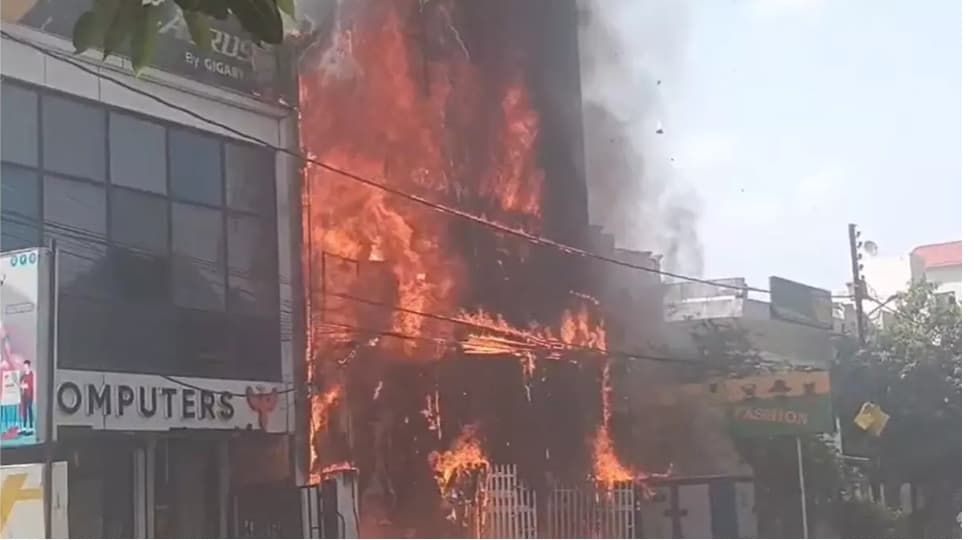
Urban areas across India are facing a dangerous surge in fire emergencies. In Delhi-NCR, fire services responded to over 7,800 calls between January and April of 2026, marking a significant year-over-year increase. This upward trend peaked in May, which broke previous records with 3,410 distinct incidents, following two high-profile fatal fires. First, on June 3, at the Flourish Stay B&B in Malviya Nagar, Delhi which killed 21 people. The second one happened on June 22, in a coaching center in Aliganj, Lucknow, which took the lives of 15 students. People often call these things "accidents" or blame bad luck. But as an environmental scientist, I see a clear pattern. Extreme heat is crashing right into our weak, overloaded city infrastructure.
To understand this, we have to look into the actual science of why these fires are starting. The same is also shown in Figure 1.
The Heatwave Catalyst: This year, the summer temperatures in India regularly cross 44°C to 45°C. In science, every material has a flashpoint; the lowest temperature at which it can catch fire. The extreme heat waves increase the temperature of the building, as if it is baked, which pre-heats the internal materials of the building. This process lowers the flashpoint of the materials. Once the small spark occurs, these hot materials bypass slow smouldering and burst into intense flames instantly.
Urban Heat Island Effect: Cities are made up of concrete, asphalt, and glass. These dark, dense materials act like giant thermal batteries which can absorb solar radiation throughout the day and release it slowly during the night. This increases the temperature of the ambient surrounding environment. This phenomenon is known as an urban heat island. Because of this effect, the city centers stay 5°C to 10°C hotter at night than surrounding rural areas. As a result, the building electrical grids never get time to cool down. They experience constant thermal fatigue until they fail.
Overload of Air Conditioners: To survive in a heated environment, people use air conditioners (AC) for 18 to 20 hours per day. In addition, the old building wires are incapable of handling this massive electrical load. The wires get hot; the plastic insulation melts, resulting in a massive, short circuit. Moreover, the outdoor AC compressor units explode because they are forced to run at high pressure under the direct radiating sun.
Landfill Methane Fires: Nearly 28% of all fire calls this year were from open garbage dumps. Extreme heatwaves speed up the anaerobic degradation of organic waste inside landfills. This creates the production of pockets of flammable methane gas (CH4). When it gets too hot, this gas spontaneously ignites, blanketing entire neighbourhoods in toxic smoke.
An electrical short circuit becomes a mass tragedy because of poor urban design and human errors, which can be understood by two Case Studies as follows
a) Case Study 1: Tight Residential Colonies (Malviya Nagar, Delhi)
The fire incident in the hotel in Malviya Nagar illustrates how poor architectural planning turns into a fatal hazard:
o The Root Cause: Defying early rumours of an air conditioner malfunction, the fire actually began in the kitchen. An employee left a commercial deep fryer unattended, causing the cooking oil to overheat, which ignited and quickly spread to nearby cardboard storage.
o The Dangerous Delay: Rather than alerting authorities immediately, staff wasted 20 to 30 invaluable minutes attempting to contain the flames in secret. The fire department was only notified after the primary escape route was entirely cut off.
o The Ventilation Trap: The hotel building was equipped with only a single narrow staircase. As the ground floor burned, the staircase funnelled thick, toxic smoke straight to the upper floors, sealing the guests inside.
Figure 1: Diagram showing the progression of a building fire, illustrating how the combustion of Polyurethane Foam (PUF) releases toxic hydrogen cyanide (HCN) gas and blocks oxygen delivery to cells.
b) Case Study 2: Sealed Commercial Hubs (Aliganj, Lucknow) The recent tragedy at a Lucknow training facility exposed how modern building architecture can inadvertently maximize casualties:
o Overcrowding: Commercial spaces are frequently packed with hundreds of students, vastly exceeding the occupant capacity their physical infrastructure was built to handle.
o The Ventilation Deficit: Modern architectural trends favour sealed glass facades to optimize air conditioning. Lacking functional windows, the building became a sealed vacuum during the fire, trapping toxic smoke and suffocating occupants.
o The Dangerous Chemistry of Modern Smoke: In modern urban fires, smoke inhalation claims lives long before the flames arrive. This is primarily driven by modern interior design choices, which rely heavily on cheap plastics, synthetic wood, and polyurethane foam (PUF) soundproofing. When these synthetics ignite, they release far more than carbon monoxide. They off-gas hydrogen cyanide (HCN), which is a swift, systemic poison. Once inhaled, HCN instantly halts cellular respiration, targeting the brain and heart to cause unconsciousness and suffocation within a minute. In dense urban centers, this heavy, toxic smoke stays trapped near ground level, creating localized public health hazards (Figure 1).
To address urban fires, there is a need to shift from reactive damage control to proactive prevention. The municipal corporations should enforce a strict three-tier strategy:
• Mandatory Pre-Summer Electrical Audit Before seasonal temperatures spike, all the high-occupancy commercial hubs and schools must undergo an independent electrical load audit. In addition, the building wiring must be systematically upgraded to cope with heavy air conditioning demands.
• Strict Regulatory Enforcement The authorities must close licensing loopholes that allow operators to bypass safety codes, such as running an unauthorized 25-room hotel under a minor 6-room guest house permit. Any facility lacking a valid Fire No-Objection Certificate (NOC) or dual escape routes should face immediate closure and criminal prosecution for the owners.
• Climate Resilient Urban Planning Long-term safety requires moving cluttered overhead electrical lines underground to eliminate spark triggers. Cities must also design dedicated lanes for emergency vehicles and implement active gas-capture systems at landfills to mitigate methane risks.
While waiting for systemic policy updates, you can secure your personal living space with four practical steps:
i. Tune Up Your Cooling Systems: Have a qualified technician inspect your air conditioner’s wiring and coolant levels before peak summer. Avoid running multiple high-wattage AC units on a single, shared circuit.
ii. Upgrade Electrical Safety Switches: Confirm your main distribution board is equipped with functional Miniature Circuit Breakers (MCBs) and Earth Leakage Circuit Breakers (ELCBs) that instantly cut power during a surge.
iii. Keep Escape Routes Clear: Avoid piling old furniture, cardboard boxes, or newspapers in balconies, hallways, or stairwells. If a fire cuts the power, you need to navigate these paths safely in complete darkness.
iv. Equip Your Space: Position an ABC-rated dry powder extinguisher near kitchen areas or main electrical panels, and install simple, battery-powered smoke detectors on your ceilings.
The Bottom Line: A warming climate sets the stage for these disasters, but human negligence pulls the trigger. Electrical short circuits can no longer be dismissed as freak accidents; they are urgent indicators that our infrastructure must adapt to rising global temperatures, from local government levels straight down to our households.
The recent increase in devastating fire incidents across India indicates a fundamental shift in urban vulnerability. Environmental scientists can no longer categorize disasters like the Malviya Nagar hotel fire or the Lucknow coaching center tragedy as random, isolated events. Instead, they are the direct consequences of a dangerous mismatch: a super-heated, climate-altered atmosphere ruthlessly exposing weak infrastructure and widespread evasion of safety codes. The data reveals a compounding chain reaction. Extreme atmospheric heatwaves lower the ignition point of common materials, a vulnerability worsened by the continuous heat retention of the Urban Heat Island effect, which prevents grids from cooling down overnight. When this relentless thermal stress combines with constant AC overloads, outdated building grids fail destructively. Compounding the danger, our reliance on cheap, synthetic interior materials like PUF soundproofing and various plastics rapidly turns minor sparks into lethal chemical events. The resulting hydrogen cyanide gas causes swift cellular asphyxiation, making victims unconscious in moments. Combined with poor building layouts, blocked single exits, and sealed glass windows, escape becomes physically impossible.
• Niyogi, D., Subramanian, S., Mohanty, U. C., Kishtawal, C. M., Ghosh, S., Nair, U. S., ... & Rajeevan, M. (2018). The impact of land cover and land use change on the Indian monsoon region hydroclimate. Land-atmospheric research applications in South and Southeast Asia, 553-575.
• Purser, D. A. (2000). Toxic product yields and hazard assessment for fully enclosed design fires. Polymer International, 49(10), 1232-1255.
Disclaimer: The views expressed in this article are solely those of the author and do not necessarily represent the views, policies, or positions of the organisation.