DH
Dr. Harshit Pant
G.B. Pant National Institute of Himalayan Environment (GBPNIHE)
The forest fire incidents in the state of Uttarakhand cannot be dismissed as an act of nature. It is the predictable outcome of policy decisions and institutional neglect: colonial-era monoculture planting, a 1988 Forest Act that stripped communities of formal stewardship, and decades of underinvestment in preventive governance. The result is a combustible landscape, ruined livelihoods, and an overburdened suppression apparatus. Reversing this trajectory requires immediate rights restoration for 11,217 Van Panchayats, a shift from suppression to prevention, and targeted investments, such as scaling up Pirul (pine needle) collection to reduce fuel needs, create women-led livelihoods, and rebuild resilient local governance.
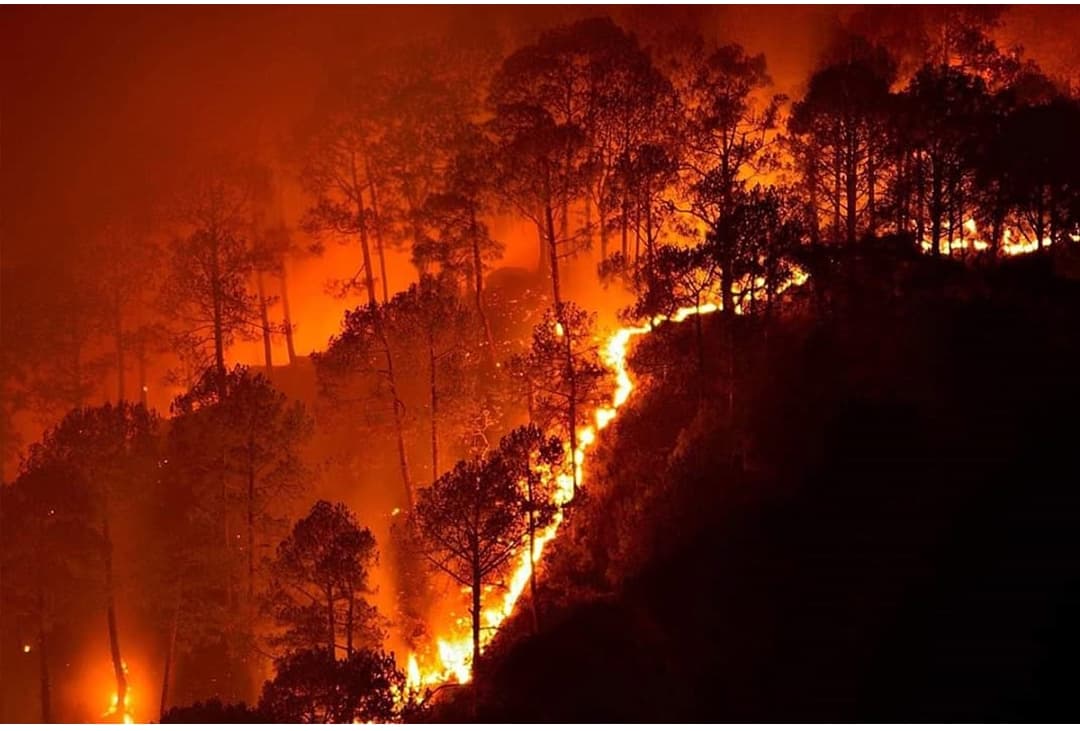
In 2024, Uttarakhand recorded 3,338 fire alerts, which are the highest in India, driven by policy choices and institutional neglect rather than fate. Decades of colonial-era monoculture planting, the 1988 Forest Act that removed communities’ formal stewardship rights, and its regular changes in forest governance and chronic underinvestment in preventive governance have produced the present catastrophe. As of 5th June 2026, the Forest Survey of India's real-time satellite alert system records 79 active large forest fires burning simultaneously across Uttarakhand, which is a state that the brief's own data shows was already India's most fire-affected in 2024. The fires span virtually every district: Almora, Nainital, Chamoli, Tehri Garhwal, Pauri Garhwal, Uttarkashi, Bageshwar, Champawat, Rudraprayag, Pithoragarh, and Dehradun are all burning at the same time. This is not a localized emergency.
It is a state-wide landscape failure. Several fires have been burning for days without containment deep inside one of the state's most ecologically sensitive protected areas. Fires have penetrated the Kedarnath Wildlife Division, Binsar Wildlife Sanctuary, and ranges under the Nanda Devi Biosphere Reserve, which are the irreplaceable high-altitude ecosystems that anchor the watershed function of the entire Indo-Gangetic basin. The three districts this brief identifies as priority targets for pine needle bio-economy expansion, Nainital, Almora, and Pithoragarh, are all among the worst-affected. These are June fires, which is the traditional season, should be winding down, but it is not. The governance interventions proposed in the following pages were urgent in the year 2024, but in June 2026, they are overdue.
Uttarakhand’s 11,217 Van Panchayats hold unmatched, place-based knowledge of fire ecology and local mitigation practices. Current law, however, prevents these institutions from exercising those stewardship functions. Restoring legal stewardship to VPs is the highest-leverage, lowest-cost policy intervention available: it would re-enable time-tested local prevention, early detection, and rapid localized response.
Pine (Pinus roxburghii Sarg.) tree’s needle (pirul) accumulation is both the state’s principal fire fuel and an underdeveloped rural economic asset. Scaling pirul collection to 25,000 tonnes per year would materially lower landscape fire risk while generating meaningful livelihoods for women-led self-help groups across the districts that face the greatest hazard. This is prevention that also advances inclusion and local resilience (Figure 1).
Operationally, the state remains fragmented in forest fire management as four separate agencies, such as the Forest Department, NDRF, Indian Air Force, and Gram Panchayats, which regularly respond to the same incidents with no unified protocol, no joint command structure, and no interoperable communications. That coordination gap costs lives, valuable forest cover, biodiversity, and taxpayer money; a binding, rapid-response Memorandum of Understanding with common protocols and communications would prevent predictable losses.
Uttarakhand continues to spend on suppression rather than prevention due to these exigencies, as every year that rights reform and investment in a local bio-economy are delayed compounds ecological destruction and community impoverishment in ways that post-fire suppression budgets cannot reverse. Policy must shift now to restore VP stewardship, institutionalize interoperable rapid response, and invest in a Pirul (pine needle) collection bio-economy to prevent future catastrophes and rebuild resilient local livelihoods.
Uttarakhand does not have a forest fire problem, but it has a compounding governance debt, and 2024 was merely the latest instalment on a century of deferred payments. In summer 2024, Uttarakhand recorded 3,338 fire alerts, more than any other Indian state, consuming over 1,300 hectares of forest, claiming five lives, and erasing ecological capital that no post-fire budget line can restore. Policy discourse frames this as a climate-driven natural disaster. That framing is wrong, and dangerously so: it obscures the institutional choices and land-use decisions made under British timber policy, a 1988 Forest Act that severed communities from stewardship, and decades of suppression-first budgeting that assembled this crisis incrementally.
This Brief introduces a Governance Debt Framework for understanding Uttarakhand's fire crisis towards the idea that every year of delayed legal reform, every year of Pine needles left uncollected, every year of VP autonomy left unreformed adds to an ecological and institutional deficit that grows with interest. The three priority interventions proposed here, namely scaling the pine needle bioeconomy, restoring VP fire stewardship, and integrating fire risk into planning law, are not incremental adjustments. They are structural debt repayments as their logic is cumulative, as each reinforces the others, and the cost of delaying any one of them is borne by all.
Begin with what is absent: the mixed oak-rhododendron forests that once defined Uttarakhand's mid-elevation slopes (1,000–2,000 m) were fire-resistant, structurally complex, and embedded in community livelihood systems. Colonial-era monoculture timber policy replaced them with Chir pine (Pinus roxburghii), which is commercially valuable, ecologically impoverished, and produces a continuous layer of dry needle litter pirul that builds year-round into a standing fire hazard. Repeated fire cycles now push degraded zones toward a self-reinforcing pine monoculture: fire kills competing broadleaf regeneration, pine colonizes burned ground, fuel loads rebuild, and the next fire burns hotter. This is not a natural equilibrium as it is a man-made feedback loop with no self-correcting mechanism unless governance intervenes.
The needle litter problem carries a direct policy dimension. For decades, pirul was treated as a waste product with no economic value, leaving communities without an incentive to collect and remove it from forest floors. The Uttarakhand government's recent pivot toward pine needle bio-economy manufacturing pellets and briquettes for energy use directly addresses this gap. However, current collection volumes remain far below what would be needed to achieve meaningful fuel-load reduction at the landscape scale. Pirul is not a waste product, but it is the physical record of a governance failure, the accumulated residue of a landscape managed for timber extraction rather than ecological resilience.
Uttarakhand has 11,217 Van Panchayats, which is one of the most historically durable community-based forest governance systems in South Asia. For generations, these institutions held granular local knowledge of fire-prone patches, seasonal ignition risks, and historical fire corridors that no state agency has replicated. The 1988 Forest Act progressively hollowed out their authority by restricting decision-making over forest offences, reducing formal rights over forest products, and severing the legal linkage between community stewardship and community reward.
The predictable consequence amply documented by researchers across the Kumaun Himalaya is a collapse in community-led fire suppression efforts. Where communities lack formal rights over the forests they protect, the incentive to invest in protection disappears. Expert assessments consistently identify this legal estrangement as a principal driver of declining community-led fire suppression in the region. The governance debt compounds with every fire season that passes without legal reform.
In summer 2024, Uttarakhand burned more than any other state in India. The state's forest estate spans approximately 38,000 km², constituting 45.4% of its total geographic area. Of this, approximately 28% fall under Subtropical Pine Forest, dominated by Chir pine, representing the most fire-vulnerable landscape in the state. The fire season spans November to June, peaking sharply from February onward. The overwhelming majority of fires are anthropogenic in origin, such as discarded cigarettes, burning of agricultural debris, campfires, and deliberate burning for pasture renewal, which are the primary ignition sources. Climate change is compounding this crisis by extending drought periods, reducing snowpack, and amplifying moisture stress (Sharma and Pant, 2016).
Uttarakhand's governance investments are not negligible. The state classified forest fires as a natural calamity in 2003, enabling disaster-response mobilization. It maintains 13,085 km of fire lines, 1,438 crew stations, 174 watcher towers, and a statewide communications infrastructure including 45 wireless repeater sets, 488 base stations, and 1,507 GPS monitoring sets. An MoU with the India Meteorological Department provides customized fire-weather forecasting. Nine pine needle pellet and briquette units are operational. In 2026, 5,625 fire watchers were deployed through Van Panchayat channels with accident insurance coverage of up to ₹10 lakh each. These are the foundations of a serious fire governance system. The problem is that they are scaled for process compliance, not outcome achievement. Thirteen thousand tons of pine needle collection over four years, against a minimum threshold of 25,000 tonnes annually for measurable fuel-load reduction. Four hundred and ninety-six forest protection committees against 11,217 Van Panchayats with no formal fire mandate have been dispatched, while only four response agencies, i.e. Forest Department, NDRF, Indian Air Force, and Gram Panchayats with no shared protocol and no joint command, are working on the ground. The state knows the right direction to implement, but the problem is the dosage, as current interventions are scaled for optics, not outcomes.
The pine needle bio-economy is the most structurally elegant intervention in this brief because it converts the hazard itself into the economic rationale for its own removal. Where every other fire-prevention programme requires communities to absorb costs, this one pay communities to reduce risk. Landscape-level fire risk reduction in Uttarakhand's highest-risk districts, such as Nainital, Almora and Pauri, requires a sustained collection of at least 25,000 tonnes per year. Reaching this threshold demands three things that current policy has not yet delivered which is a guaranteed off-take market including mandatory government procurement for schools, forest rest houses, and public buildings; an incentive structure of at least ₹2 per kg channeled through VPs and integrated with MGNREGA to formalize collection as rural employment; and 15 additional manufacturing units at ₹3 crore each, sited near collection-dense forest areas.
International analogues community biomass programmes in Nepal, Bhutan, and temperate European forest systems consistently show that bio-economy scaling fails without a guaranteed offtake. The market must precede the supply chain, not follow it. Uttarakhand's State Energy Department and SIDCUL must embed pine pellet procurement preferences in state tender rules before manufacturing capacity is expanded. This intervention also carries strong ESG alignment as it directly reduces quantifiable carbon loss from landscape fires relevant to the Task Force on Climate-related Financial Disclosures (TCFD) physical risk metrics, and produces verifiable biodiversity and community outcomes benchmarkable against the Taskforce on Nature-related Financial Disclosures (TNFD) and Kunming-Montreal Global Biodiversity Framework (KM-GBF) standards.
No fire prevention infrastructure can replicate what VPs offer, which is intimate, daily, community-embedded vigilance rooted in generations of local ecological knowledge. Himalayan communities hold fire-weather calendars linked to pastoral cycles, micro-topographic knowledge of fire corridors, and management practices encoded in cultural festivals, including the Kangdali festival calendar, which captures community understanding of Strobilanthes mast-seeding cycles and their implications for high-altitude fire risk and ironically, none of this is captured in standard fire risk assessment frameworks, and none of it is mobilized by current law or rules and regulations.
The legal repair required is specific in aspect of this scenario as Uttarakhand's Panchayati Forest Rules must be amended to grant VPs three explicit authorities, which are formal fire stewardship rights over adjacent forest areas, enforceable jurisdiction over fire line maintenance and first-response coordination, and access to multi-year performance-linked funding streams tied to verifiable fire prevention outcomes. A stewardship grant of ₹50,000 per year per active VPs, scaled to fire-free years and verified fuel-load reduction, would cost approximately ₹56 crore annually. Against the annual economic losses from forest fires, this is not an expenditure. It is an investment with a quantifiable return.
Complementing legal reform, a Traditional Ecological Knowledge (TEK)–Science Integration Protocol, across Nainital, Almora, and Chamoli districts, could be another pilot-based scenario to map community fire-weather knowledge onto satellite alert layers from the Forest Survey of India. This is a low-cost, high-value enhancement to early-warning capacity that current policy frameworks do not exploit. The community fire watcher programme should also be expanded from 5,625 to 10,000 trained watchers, retaining the ₹10 lakh accident insurance coverage established in 2026.
Uttarakhand's current governance failure has a spatial dimension that neither the bioeconomy nor the VPs reform directly addresses, which is the systematic exclusion of fire risk from land-use planning decisions. Every hill-station development, every road constructed through forest-proximate zones, every hydropower project sited on a fire-degraded watershed increases the exposure of infrastructure and communities to fire risk without any formal requirement to assess or disclose that exposure.
A mandatory fire risk assessment chapter in all Environmental Impact Assessments for infrastructure in forest-proximate zones would achieve two things simultaneously. First, it would force project proponents to quantify and disclose TCFD-aligned physical climate risk from forest fire directly relevant for institutional investors with exposure to Uttarakhand's hydropower, tourism, and transport infrastructure. Second, it would require TNFD LEAP methodology biodiversity screening and IFC Performance Standard 6 habitat impact evaluation as mandatory annexures, bringing project clearances into alignment with India's KM-GBF commitments.
A Multi-Agency Rapid Response Protocol through an institutional MoU formally linking the Forest Department, NDRF, Indian Air Force, and Gram Panchayats with a standardized incident command system and quarterly joint drills would close the coordination gap that currently costs lives and forest cover every fire season (Sharma & Pant, 2017). Four agencies responding to the same fire with no shared protocol is not a resource problem. It is a design problem, and it has a design solution.
Uttarakhand's forests are not a departmental asset as they are the water tower of the Indo-Gangetic plains and the hydrological infrastructure that recharges groundwater, moderates stream flow, and determines the downstream fate of the Ganga and its tributaries for a billion people. Every fire that burns a Himalayan slope adds silt to hydropower reservoirs, reduces groundwater recharge, and accelerates surface runoff into river systems already stressed by glacial retreat. The environmental costs of Uttarakhand's annual fire cycle are national in scale and are not being counted in any state budget.
No comprehensive ecosystem services valuation has yet been applied to Uttarakhand's fire-affected forests. Policy decisions on fire prevention investment are being made without a full accounting of what is being lost in carbon sequestration value, watershed service value, biodiversity value, and livelihood destruction. Commissioning this valuation through research with outputs feeding into state Green GDP accounting is not academic housekeeping. It is the prerequisite for politically defensible prevention budgets.
For private investors and development finance institutions, the ESG calculus is equally clear. Investors financing Uttarakhand's hydropower dams, hill-station resorts, and mountain highways are accumulating unpriced, undisclosed fire risk on their balance sheets. When burned slopes silt reservoirs, that is a physical asset impairment. When fire destroys watershed function, that is an operational risk for every enterprise that depends on it. These are material liabilities under TCFD physical risk disclosure requirements, currently invisible to due diligence processes that do not mandate fire risk assessment. The governance reforms proposed in this brief are simultaneously a risk-reduction agenda for every investor with exposure to Uttarakhand's natural capital.
The following five actions are initiable within the current policy and budget cycle. Each addresses a specific strand of governance debt. Together, they constitute the minimum viable reform package.
Every year that Pine needles blanket unmanaged forest floors, the next fire season begins with a larger fuel load. Every year that VPs lack formal stewardship rights, another cohort of community firefighters concludes that the forest they protect is not legally theirs to save. Every year that fire risk is excluded from an EIA, another infrastructure project is sited without accounting for the hazard it faces. 2024 was worse than 2023 for structural reasons that a departmental review will not fix, and ironically, 2025 and 2026 are on the same path. The question facing policymakers is not whether to reform the ecological and institutional logic of reform is inescapable, but whether to reform before or after the next landscape-scale fire event forces the issue at far greater cost.
Three institutions define the ceiling of what reformed governance can achieve. VPs given legal stewardship rights and multi-year performance funding can deliver what no state department can buy, which is the intimate, daily vigilance that prevents fires from starting. The pine needle bio-economy, at a genuine landscape scale, converts the ecosystem's greatest vulnerability into its communities' most reliable income source. And research institutions, if properly resourced, can generate the evidence-based ecosystem valuations, TEK integration protocols, fire-risk methodologies that make every other intervention more precise and more defensible.
Uttarakhand's forests are a national water tower, a biodiversity reserve, a carbon commitment under India's Nationally Determined Contributions, and the economic foundation of millions of forest-dependent lives. The governance they receive should reflect what they are worth, as the debt is large, the repayment plan is available, and ironically, the cost of delay is measured in forests.
Sharma, S., & Pant, H. (2017). Vulnerability of Indian Central Himalayan forests to fire in a warming climate and a participatory preparedness approach based on modern tools. Current Science, 112(10), 2100–2105. http://www.jstor.org/stable/26163950
Disclaimer: The views expressed in this article are solely those of the author and do not necessarily represent the views, policies, or positions of the organisation.